What the Fief? The Strange World of Jersey’s Medieval Landlords, Manors and Money
Posted on

Imagine living in Jersey and discovering part of your rent was payable in chickens, a portion of your harvest belonged to your landlord, and you couldn’t even decide which mill to use to grind your own grain.
And no, I’m not talking about the latest developments in Jersey’s housing market (although the cost of living does sometimes make you wonder if a few chickens would be preferable to a portion of the rent…)
I’m talking about Jersey’s feudal system. I’m talking about fiefs, manors and seigneurs (the latter of which I keep misspelling despite the mounds of reading and research I have done…).
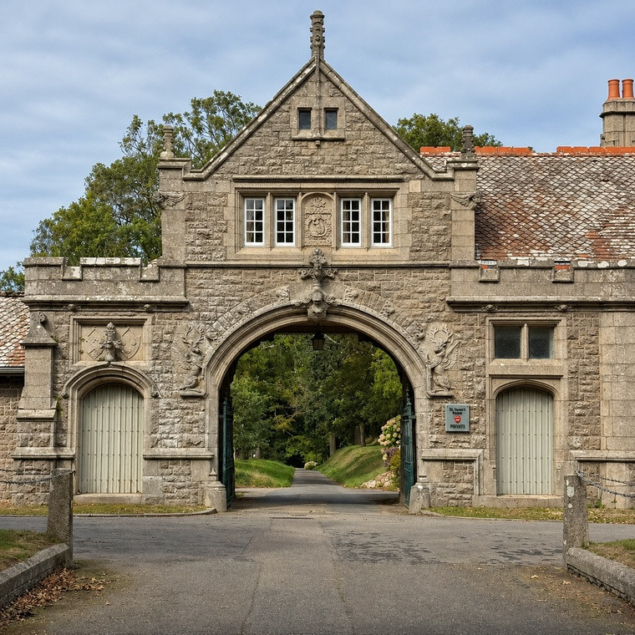
For centuries, much of the Island was divided into areas of land known as fiefs, controlled by powerful landowners called seigneurs, whose imposing manor houses remain dotted around our countryside. Some we can still amble through, others remain private residences.
Although we might associate feudalism with medieval knights, castles and a world that disappeared hundreds of years ago, Jersey held on to parts of this system for quite a long time.
In fact, some elements of it still exist today.
But before we get into all that, there are three terms worth understanding.
A fief was the area of land held under the feudal system. It was generally granted by the Crown in exchange for particular services or obligations (or as nice rewards for mates of the King e.g. Otto de Grandieson who was given lordship of the Channel Islands by King Edward I for no reason other than the King feeling the need to reward his friend for his “intimacy” and “faithful service”…).
A seigneur (French for lord [which thankfully I can spell]) was the lucky duck who held that fief, often belonging to one of Jersey’s prominent families.
A manor was generally the principal residence associated with a fief, although not every fief had a grand manor house, and not every manor carried feudal status. (I’d feel pretty hard-done-by if my manor didn’t come with its own fief…)
Think of the fief as the estate, the seigneur as the landowner and the manor as the rather impressive house they might have lived in.
So how did Jersey end up with this arrangement?
Well, like a lot of our history, the answer lies with the French – Normandy to be exact.
In 933, Jersey became part of the Duchy of Normandy and over the following centuries, Norman laws, customs and systems of landownership were established in the Island (so this is why I had to memorise what felt like 50,000 French verbs at GCSE level when the language was mandatory…).
During the eleventh and twelfth centuries, land was divided into fiefs and granted to individuals or families in exchange for loyalty, services and other obligations. Those families could then allow tenants to occupy and farm parts of their land, receiving rent, produce or labour in return.
When King John lost mainland Normandy to the French Crown in 1204, Jersey remained loyal to the English Crown but retained much of its Norman legal system. This meant that while the world around continued to change, Jersey’s feudal arrangements continue on down their own distinctive path, neither French nor English so that by the fourteenth century, the system was firmly embedded in Island life.
The Extente of 1331, often deemed Jersey’s Domesday Book, details the records of royal rights, revenues and obligations during the period, but for ordinary islanders, feudalism was about more than whose name appeared in an official record.
It affected how they lived, worked and even what happened to the crops they grew.
Most people depended upon agriculture, and tenants who occupied land within a fief could owe their seigneur a variety of payments and services.
These weren’t always necessarily paid in money.
A payment known as a poulage could involve poultry, eggs or bread, while champart entitled the seigneur to a proportion of the harvest, traditionally every twelfth sheaf of grain or flax (I have no idea why twelve is the magic number here…)
Other obligations were a bit more unusual.
Tenants of the Fief de la Fosse for example were reportedly required to provide the ashes of burnt seaweed (I assume for fertiliser but who really knows when it comes to history…).
And if you thought you could simply take your grain wherever you pleased, that wasn’t always the case either. Some tenants were required to use a particular mill associated with their fief, where the seigneur would retain a portion of their grain as payment.
Seigneurs could also have their own manorial courts, dealing with matters such as unpaid rents, land disputes and disagreements between tenants.
These (thankfully) weren’t gathering where the seigneur could make whatever decision he fancied. Proceedings were generally conducted through a different appointed official known as a sénéchal.
And despite the inequalities of the system, Jersey tenants weren’t necessarily without rights. Some could inherit and pass on the land they cultivated within the fief, while other enjoyed access to communal land for things like grazing livestock or collecting fuel.
Of course, the seigneurs themselves weren’t entirely free of responsibilities.
Fiefs were held subject to the obligations to the Crown, which could include payments, loyalty or even military services.
And this brings us to one of Jersey’s more well-known feudal estates.
St Ouen’s Manor
Associated with the de Carteret family since the twelfth century, the manor was the centre of one of Jersey’s most important fiefs.
It held the unusual status of a Fief Haubert; a fief associated with knight service. Essentially this meant that holding the land came with military responsibilities.
In return for the estate, the seigneur was expected to provide military services when required with St Ouen’s seigneur being mandated to provide castle guard duties, all the way on the other side of the Island, at Mont Orgueil (in case the French who developed the very system of landholding they enjoyed wanted to storm the rock…again).
The de Carteret’s went on to become one of the Island’s most influential families, holding important positions in Jersey’s political and military affairs.
One family member, Sir George de Carteret became particularly significant during the English Civil War and later acquired an interest in land across the Atlantic.
That land would become part of New Jersey.
Yes, it’s thanks in part to the de Carteret family that, when we’re travelling abroad, we have to explain we’re from ‘Old Jersey’.
But St Ouen wasn’t the only important estate.
Across Jersey, historians have identified at least 245 fiefs over the centuries, although they did not all exist at the same time.
Some covered substantial areas of the Island, while others encompassed a few fields.
Prominent estates included Trinity Manor, associated over the centuries with the Lemprières and the de Carterets and Samarès Manor.
The seigneurs were, in many respects, the local elite; the celebrities of their day. Their land, wealth and family connections could give them considerable influence within their parishes and sometimes even in Island politics.
But being a seigneur didn’t automatically entitle someone to govern everyone living on their fief, and their authority remained subject to the wider laws and institutions of Jersey.
So what happened to this strange system?
Well, there wasn’t one single dramatic event where Jersey’s seigneurs handed over the keys to their manors, surrendered their chickens and seaweed ash to retire from feudal life.
Instead, the system gradually became redundant.
As military responsibilities became increasingly organised through the Crown and Island Authorities, the need for landowners to fund and provide military service diminished.
Changes in agriculture and commerce made payments involving livestock, crops and labour increasingly impractical (imagine putting seaweed ash on your income tax return…)
And as Jersey’s courts and institutions developed, the responsibilities of manorial courts became more restricted.
Yet some traditional obligations survived long after the circumstances that originally justified them had disappeared.
It wasn’t until the 1960s that many of the seigneurial financial rights and feudal obligations were abolished or significantly reduced.
That’s pretty remarkable actually.
By this point, Jersey had an airport, television was becoming a familiar part of household life and the Island was developing its modern finance industry.
Yet aspects of a system inherited from medieval Normandy were only then being formally dismantled…
And even now, Jersey hasn’t completely abandoned its feudal past.
Fiefs and seigneurial titles still exist, although their modern significance is rather symbolic and ceremonial rather than practical.
One particularly interesting surviving tradition is the Assise d’Héritage; an annual ceremonial sitting of Jersey’s Royal Court.
The ceremony maintains a connection between Jersey’s historic fiefs, their seigneurs and the Crown, preserving a tradition rooted in centuries of Island history.
And the evidence isn’t limited to court ceremonies or dusty historical records.
You can still see reminders of Jersey’s feudal past across the Island.
St Ouen’s Manor and Samarès Manor both still offer striking examples of historic estates, while places such as Le Moulin de Quétivel provide a glimmer into the agricultural world in which grain milling was such an important part of everyday life.
Our place names, family histories and land records also preserve countless connections to the system. Jersey Archive holds extensive records relating to fiefs, land transactions, rents and seigneurial families, offering insight into a society that operated very differently from the one we recognise today.
And perhaps that’s what’s so interesting about Jersey’s feudal history.
We tend to think of the medieval world as something distant, belonging to castles, history books, knights and tourneys. But in Jersey that world has left a distinct visible legacy.
The grand manor houses we pass as we desperately hope we don’t get stuck behind a tractor down a green lane, the old mills tucked away in the wooded valleys where we take our dogs and even some of the titles still recognised in the Royal Court all have connections to a system that once shaped the daily lives of Islanders.
A system where land could come with military obligations, rent might be paid in chickens or ash and a seigneur could lay claim to part of your harvest.
So the next time you pass one of Jersey’s historic manor houses, remember you’re looking at more than an attractive building.
You’re looking at a surviving piece of an Island that for centuries, operated according to rules and traditions inherited from medieval Normandy.
And if nothing else, we can be grateful that our modern landlords generally prefer bank transfers to ashes and poultry.
Sources and Further Reading
Full sources can be made available upon request.
The King’s Other Islands of the Sea: The Channel Islands in the Plantagenet Realm, 1254 – 1341 by Alexander Kelleher
Jersey Heritage
Jersey Archive
Jersey and Guernsey Law Review
Royal Court of Jersey
Jerripedia
States of Jersey – Legislation Relating to Seigneurial Rights